
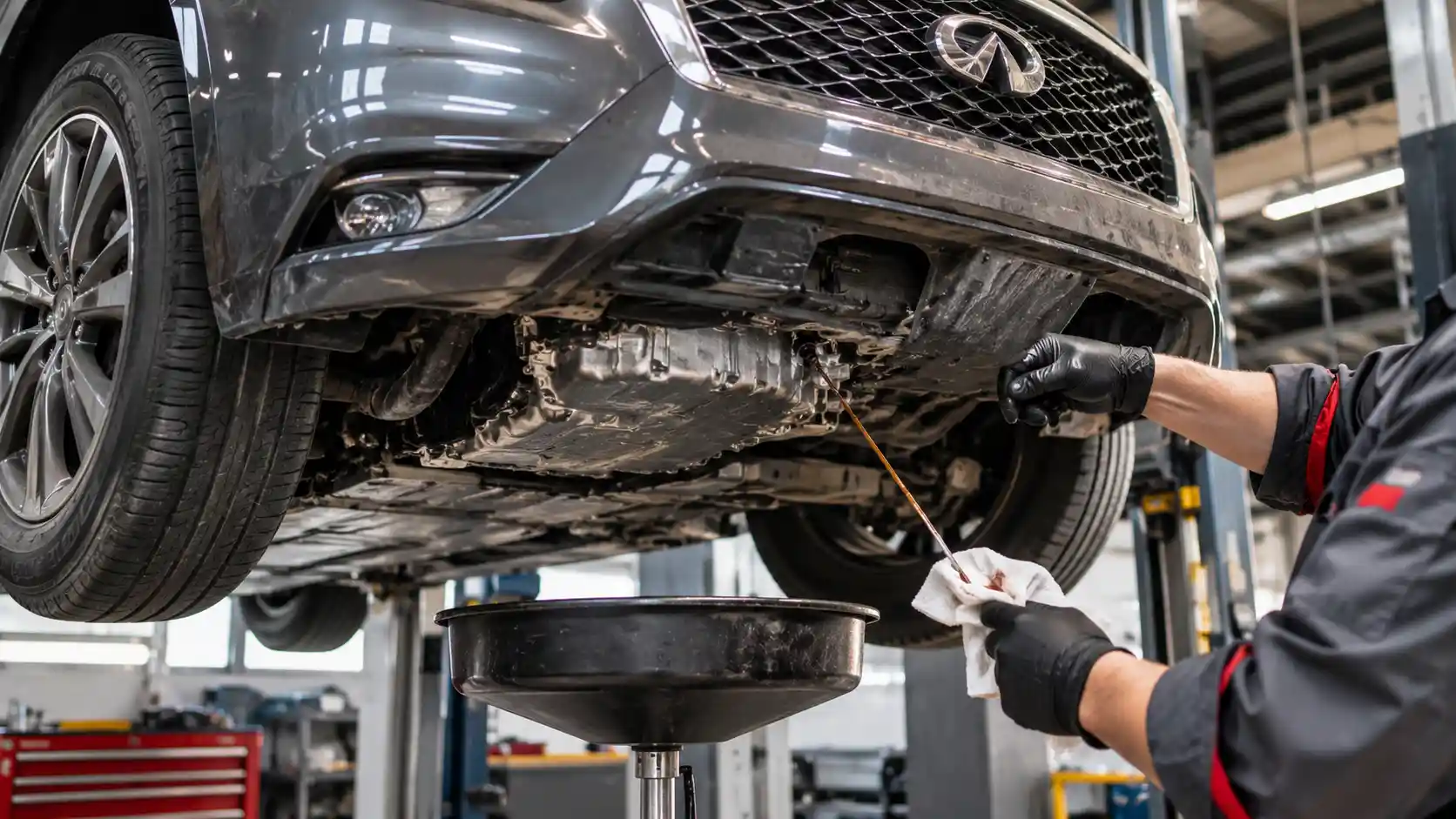
What Is CVT Fluid and How Does It Work?
CVT stands for Continuously Variable Transmission. Unlike a traditional automatic gearbox that uses fixed gears, a CVT changes its gear ratio continuously to match the engine speed and driving conditions. It uses a belt or chain and a system of pulleys to transfer power from the engine to the wheels.
CVT fluid helps this process by creating hydraulic pressure, reducing wear, and controlling heat inside the transmission. It also provides the right level of friction between moving parts. Without clean and suitable fluid, the transmission may struggle to change its ratios smoothly.
When Should You Change Infiniti CVT Fluid?
The right time to replace transmission fluid depends on the model year and the maintenance schedule provided by Infiniti. Some models require regular inspections, while others have a set replacement interval. For example, the 2023 Infiniti QX50 maintenance guide lists CVT fluid replacement at 60,000 miles under its specified schedule. This is around 96,500 km.
However, this figure should not be treated as a fixed rule for every Infiniti. Driving in heavy traffic, frequent short trips, and high temperatures can put extra stress on the transmission. Always check the owner's manual or service guide for your exact model.
Factors That Affect CVT Fluid Change Intervals
Your driving habits and road conditions can affect how quickly transmission fluid loses its useful properties. Some conditions may require more frequent inspections than normal.
Important factors include:
- High temperatures: Hot weather can increase transmission fluid temperature and speed up fluid breakdown.
- Heavy traffic: Frequent stopping and starting can increase transmission workload.
- Long-distance driving: Extended driving periods can expose the transmission to heat for longer.
- Rough driving conditions: Heavy loads and demanding road conditions can increase transmission stress.
- Poor maintenance: Delayed inspections can allow leaks or fluid problems to go unnoticed.
A technician can check the fluid condition and help you follow the correct maintenance schedule.
Why Is Infiniti CVT Fluid Change Important?
CVT fluid does more than lubricate the transmission. It helps create the hydraulic pressure needed for the pulley system to work correctly.
It also controls heat and protects important internal parts from excessive wear. Over time, heat and small particles can affect the fluid's performance.
When the fluid loses its required properties, the transmission may not operate as smoothly as it should. Regular replacement at the correct interval helps maintain proper pressure, reduce friction, and protect the transmission from avoidable damage. It can also help prevent repair costs caused by poor fluid condition or delayed maintenance.
6 Signs Your Infiniti Needs a CVT Fluid Change
Transmission fluid problems do not always cause an immediate warning light. Sometimes, the first signs appear while accelerating, slowing down, or changing between driving modes. Paying attention to these changes can help you arrange an inspection before the problem becomes worse.
Delayed Acceleration
If your Infiniti takes longer than usual to respond when you press the accelerator, the transmission may not be transferring engine power properly. Old or low CVT fluid can affect hydraulic pressure inside the gearbox.
However, delayed acceleration can have other causes, including sensor or mechanical faults. A transmission inspection can help identify the actual problem.
Jerking or Shaking While Driving
A healthy CVT should provide smooth acceleration without noticeable gear changes. If your Infiniti starts jerking, shaking, or moving unevenly, the transmission may have a fluid or mechanical issue.
Low fluid levels, incorrect fluid, or internal wear can affect how the pulley system works. Do not ignore repeated jerking, as it may point to a problem that needs attention.
Unusual Whining or Humming Noises
A whining or humming sound coming from the transmission area can indicate a problem with fluid pressure or internal components.
CVT systems normally produce some operating noise, but a new or unusually loud sound should be checked. Low fluid levels, worn bearings, or damaged pulleys can cause similar noises. A technician can inspect the transmission to find the source.
Transmission Overheating Warning
CVT fluid helps remove heat from the transmission during operation. When the fluid level is low, or its condition has become poor, the system may struggle to control temperature.
You may notice a transmission temperature warning on the dashboard. If this happens, stop safely and follow the instructions in your owner's manual. Continuing to drive with an overheating transmission can cause serious damage.
Burning Smell
A burning smell after driving may indicate that the transmission fluid is getting too hot. Overheated fluid can lose its ability to protect internal components properly. However, a burning smell may also come from engine oil leaks, brakes, or other parts.
If you notice this smell along with transmission problems, arrange a professional inspection rather than assuming that a fluid change alone will solve it.
Transmission Warning Light
Some Infiniti models have warning systems that alert drivers when the transmission detects an issue. A warning light may appear because of high fluid temperature, sensor problems, pressure faults, or other transmission issues. A diagnostic scan can help identify the stored fault codes. Avoid ignoring the warning, even if the car seems to drive normally.
What Happens If You Delay CVT Fluid Replacement?
Driving with old or contaminated transmission fluid can increase the risk of internal wear. As the fluid loses its ability to control heat and maintain the required hydraulic pressure, the transmission may start working harder.
This can affect the belt or chain, pulleys, valves, and other internal parts. Over time, poor fluid condition may contribute to slipping, overheating, rough operation, and transmission damage.
Repairs to a CVT can be expensive because the gearbox contains several connected parts that must work together. Following the recommended service schedule is a simple way to reduce the risk of avoidable transmission problems.
Which CVT Fluid Is Right for Your Infiniti?
Using the correct transmission fluid is important because different CVT systems have different requirements. Infiniti owner manuals specify Genuine Nissan CVT Fluid NS-3 or an approved equivalent for certain CVT models.
However, you should always confirm the required fluid specification for your particular car before servicing it. Using ordinary automatic transmission fluid (ATF) or manual transmission oil in a CVT can cause serious damage.
These fluids have different properties and may not provide the friction and pressure control required by the system. Never mix different fluid types unless the manufacturer specifically allows it. Check the owner's manual or ask a qualified technician to confirm the correct product.
CVT Fluid Change vs. Transmission Flush: What Is the Difference?
A CVT fluid change and a transmission flush are two different service methods. A fluid change usually involves draining the old fluid from the transmission and refilling it with the correct type.
Some old fluid may remain inside the system, depending on the design and service method. A flush uses special equipment or a controlled procedure to replace more of the old fluid.
However, not every Infiniti CVT requires or allows the same process. The correct method depends on the vehicle's service instructions and transmission condition. A technician should check the manufacturer's recommendations before deciding which method is suitable.
What Is Included in Infiniti CVT Fluid Service?
A proper transmission fluid service involves more than simply adding new oil. The technician needs to check the fluid condition, look for leaks, and follow the correct filling procedure. Many CVT systems require a specific fluid temperature and level-checking method to avoid overfilling or underfilling.
A typical service may include:
- Inspecting the transmission housing and connections for leaks.
- Checking the existing fluid condition.
- Draining the old fluid according to the approved procedure.
- Inspecting the drain plug and related components.
- Refilling with the correct CVT fluid.
- Checking the fluid level at the required temperature.
- Testing the transmission for smooth operation and leaks.
Following the correct process helps maintain the transmission's performance and reduces the risk of service-related problems.
How UAE Driving Conditions Affect Infiniti CVT Performance
The UAE climate can put extra pressure on your Infiniti's transmission. High outdoor temperatures, heavy traffic, and frequent stop-and-go driving can increase the workload on the gearbox.
During long summer drives, the transmission may also remain at higher operating temperatures for extended periods. Driving through city traffic in Abu Dhabi or Dubai often involves repeated acceleration and braking. These conditions can increase heat inside the transmission.
Regular fluid inspections are useful because they help detect leaks and fluid problems before they affect performance. Owners should follow their vehicle's maintenance schedule and discuss severe driving conditions with a qualified technician.
How to Maintain Your Infiniti CVT Transmission
Regular care can help your Infiniti's CVT work smoothly for longer. Following the correct service schedule is important, but your driving habits matter too. Avoid ignoring warning lights, unusual noises, or changes in acceleration. Small problems can become more serious when the transmission continues operating under poor conditions.
Follow these simple maintenance tips:
- Check CVT fluid condition and level during scheduled inspections.
- Use only the fluid recommended for your Infiniti model.
- Avoid sudden acceleration when the transmission is cold.
- Do not ignore transmission warning lights.
- Get leaks checked as soon as possible.
- Avoid putting unnecessary loads on the transmission.
- Follow the manufacturer's recommended service intervals.
- Get a transmission inspection if you notice jerking or unusual noises.
These steps can help reduce unnecessary wear and keep your gearbox in good working condition.
Conclusion
An Infiniti CVT fluid change is an important part of transmission maintenance. Clean and suitable fluid helps control heat, maintain hydraulic pressure, reduce friction, and protect internal parts. Delaying replacement can affect transmission performance and increase the risk of costly repairs.
The correct Infiniti repair service interval depends on your Infiniti model, mileage, and driving conditions. High temperatures and heavy traffic in the UAE make regular inspections especially useful. Watch for signs such as delayed acceleration, jerking, whining noises, and transmission warning lights.