
Common Causes of Infiniti Overheating
Several cooling system problems can cause an Infiniti to overheat. Some are simple to repair when found early, while others can lead to major engine damage if ignored.
Low Coolant Level
Coolant carries heat away from the engine and takes it to the radiator, where the heat can be released. If the coolant level becomes too low, the system cannot remove heat properly. A low level may happen because of a leak from a hose, radiator, water pump, reservoir, or another part.
Check the coolant reservoir when the engine is cold. If the level keeps dropping after a top-up, do not keep adding coolant without finding the cause. Repeated coolant loss usually means there is a leak that needs proper inspection.
Coolant Leaks
A coolant leak is one of the most common reasons for overheating. The leak may come from a cracked hose, radiator, water pump, reservoir, gasket, or loose connection. Small leaks can be difficult to see because coolant may only escape when the system becomes hot and pressurized.
Look for wet spots under the car, dried coolant marks around the engine bay, or a sweet smell after driving. A mechanic can use a cooling system pressure test to find leaks that are not easy to see during a normal inspection.
Faulty Radiator Fan
A radiator fan is especially important when an Infiniti is sitting in traffic. At highway speed, natural airflow helps cool the radiator. When the car is stationary, the fan needs to pull air through the radiator.
If the fan motor, relay, wiring, control module, or fan assembly develops a fault, the engine may stay at a normal temperature while driving but become hot when stopped.
This pattern is an important clue. If the temperature rises in traffic and drops after the car starts moving, the radiator fan should be one of the first parts checked.
Blocked or Dirty Radiator
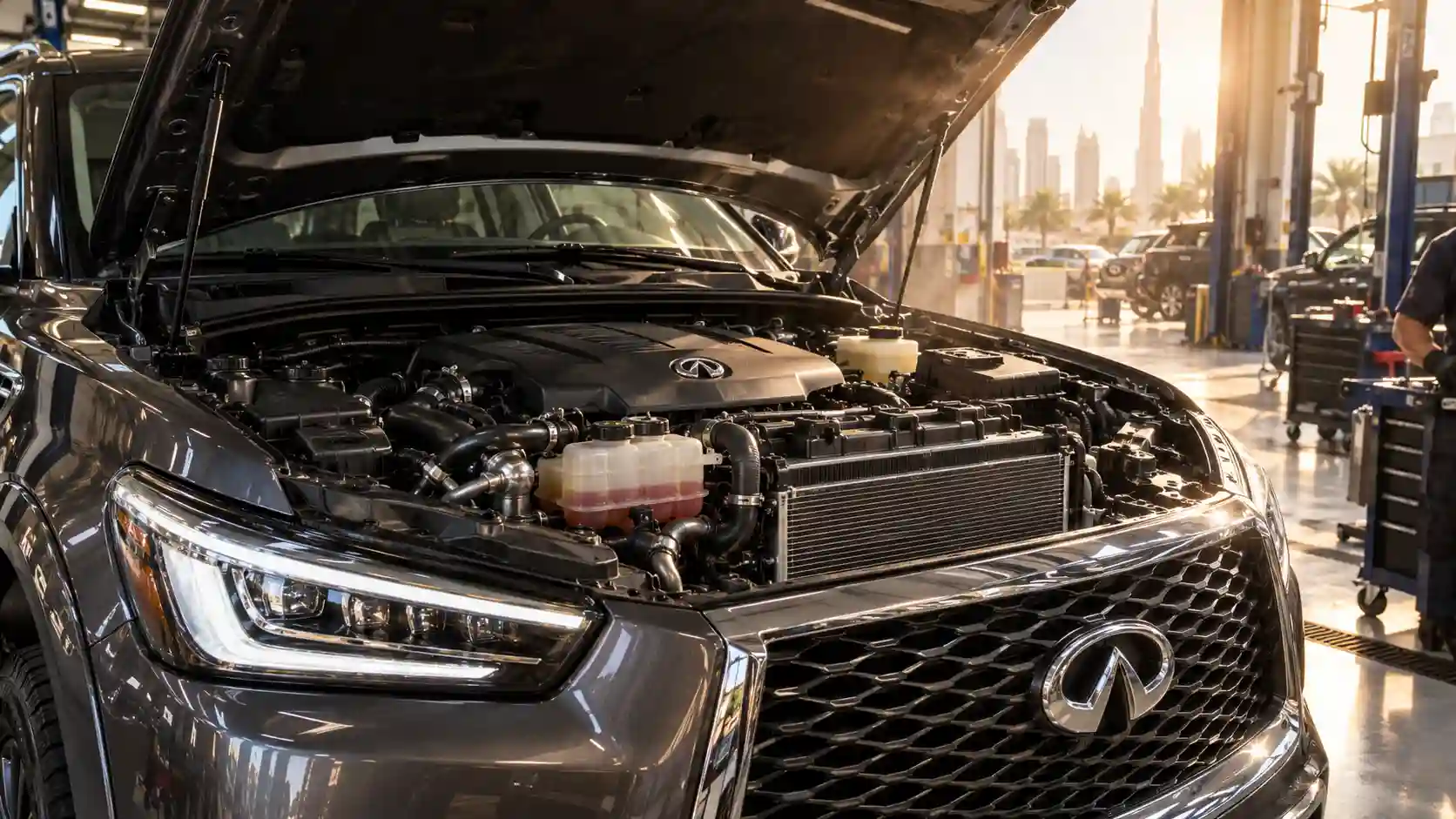
The radiator needs good airflow and clean coolant passages to remove engine heat. Dust, sand, dirt, insects, and other debris can collect around the radiator fins and reduce airflow. Internal blockage can also develop when old or contaminated coolant leaves deposits inside the cooling passages.
A radiator may look fine from a quick inspection while still having poor heat transfer. A technician can check the radiator for blocked fins, damaged areas, restricted coolant flow, and other signs of poor cooling performance.
Faulty Thermostat
The thermostat controls coolant flow between the engine and radiator. When the engine is cold, it stays closed to help the engine reach its normal operating temperature. As the coolant becomes hot, the thermostat opens and allows coolant to flow toward the radiator.
If the thermostat becomes stuck closed, hot coolant cannot flow through the radiator properly. This can cause the engine temperature to rise quickly. A faulty thermostat can also cause unusual temperature changes or prevent the engine from reaching the correct operating temperature.
Failing Water Pump
The water pump keeps coolant moving through the engine and cooling system. If the pump becomes worn, damaged, or develops a leak, coolant circulation can become weak. The engine may then produce more heat than the system can remove.
Possible signs include overheating, coolant leakage, unusual whining or grinding sounds, and temperature changes that become worse under load. A water pump problem should be diagnosed properly because other cooling system faults can create similar symptoms.
Can AC Use Cause an Infiniti to Overheat?
The AC itself should not make a healthy Infiniti overheat. However, the AC system adds heat and engine load, especially during hot weather. The AC condenser sits in front of the radiator, so both systems depend on good airflow.
This is why a weak cooling fan can sometimes cause two problems at the same time. The engine temperature may rise while the AC becomes less effective when the car is stopped.
Once the vehicle starts moving, both problems may improve because natural airflow increases. This pattern should be checked rather than assuming the AC is the only problem.
Signs Your Infiniti Is Overheating
An overheating engine does not always start with steam coming from under the bonnet. There can be several earlier warning signs. Paying attention to them can help prevent serious engine damage.
Temperature Gauge Rising
The temperature gauge is one of the easiest signs to notice. If the needle moves above its normal position, do not ignore it. A small change may point to a developing cooling problem, while a rapid rise toward the red zone needs immediate attention.
The gauge itself can also have a fault, so the reading should be checked if it does not match other symptoms. A technician can test the coolant temperature sensor and related electrical systems when needed.
Steam or Smoke Under the Bonnet
Steam coming from under the bonnet can mean coolant is escaping onto a hot engine or cooling system component. It can also happen when the engine has become severely overheated.
If you see steam, stop somewhere safe and switch off the engine. Do not remove the radiator cap or coolant reservoir cap while the system is hot. Pressurized coolant can cause serious burns. Wait for the engine to cool before any inspection.
Coolant Smell
A sweet smell around the engine bay or after parking can be a sign of leaking coolant. You may notice it before seeing a visible puddle. A leak can be small at first and become worse as the engine gets hotter.
Do not ignore repeated coolant smells. Checking the hoses, radiator, water pump, reservoir, and connections can help find the source before the coolant level becomes dangerously low.
AC Becomes Weak in Traffic
If the AC is cold while driving but becomes warmer when the Infiniti is stopped, airflow may be part of the problem. A weak radiator or condenser fan can reduce cooling performance at low speed.
This does not always mean the engine is overheating, but if the AC issue happens together with a rising temperature gauge, the cooling fan and airflow system should be checked quickly. You may need quick AC repair service.
What Should You Do If Your Infiniti Overheats?
If the temperature gauge moves into the hot range or an overheating warning appears, do not continue driving just to reach your destination. Turn off the AC, move to a safe place, and switch off the engine as soon as it is safe to do so.
Do not open the coolant reservoir or radiator cap while the engine is hot. The cooling system can be under pressure, and hot coolant may spray out. Allow the engine to cool before checking anything. If the car has already overheated badly, professional inspection or recovery is safer than driving it to a workshop.
How Is Infiniti Overheating Diagnosed?
Finding the real cause is more important than simply adding coolant. A technician should inspect the entire cooling system because several faults can create the same overheating symptom.
The diagnosis may include:
- Checking the coolant level and condition
- Pressure testing the cooling system
- Inspecting hoses and connections
- Testing the radiator fan
- Checking the thermostat
- Inspecting the water pump
- Checking the radiator for blockage
- Testing the coolant temperature sensor
- Scanning the vehicle for fault codes
- Checking for signs of head gasket failure
A proper diagnosis helps prevent unnecessary parts replacement and makes sure the actual cause is repaired.
Can Overheating Damage an Infiniti Engine?
Yes. Driving for too long with a high engine temperature can cause serious damage. Excess heat can affect the cylinder head, head gasket, engine block, pistons, seals, and other internal components.
A damaged head gasket can allow coolant and engine oil to mix or allow combustion gases to enter the cooling system. Severe overheating can also cause the cylinder head to warp. These repairs are far more expensive than fixing a leaking hose, weak fan, thermostat, or other cooling system problem early.
This is why the temperature warning should never be treated as something that can simply be ignored.
How to Prevent Infiniti Overheating in UAE
Regular cooling system checks are important for Infiniti owners in Abu Dhabi and other parts of the UAE. The goal is to find weak parts before they cause an overheating event in traffic.
Useful checks include:
- Check the coolant level when the engine is cold.
- Look for signs of coolant leaks.
- Keep radiator fins free from heavy dust and debris.
- Check that the radiator fan operates correctly.
- Use the correct coolant for your Infiniti.
- Follow the recommended coolant service interval.
- Inspect hoses for cracks and soft areas.
- Pay attention to changes in AC performance.
- Do not ignore a rising temperature gauge.
- Have repeated overheating diagnosed instead of repeatedly topping up coolant.
Why Traffic Makes Cooling Problems Worse
An Infiniti may run normally on an open road but overheat during a long traffic queue. This happens because the car loses the natural airflow created by forward movement. The radiator fan becomes much more important at low speed.
Traffic also means the engine continues producing heat while the car is barely moving. At the same time, the AC system is often running continuously because of the UAE climate. If the cooling system has a weak fan, blocked radiator, low coolant level, or another fault, these conditions can expose the problem quickly.
When Should You Get Your Infiniti Checked?
You should have your Infiniti inspected if it repeatedly runs hotter than normal, loses coolant, shows a temperature warning, produces steam, or develops unusual cooling fan noises. An AC system that becomes warm only in traffic can also be a useful warning sign when it happens with rising engine temperature.
Do not wait for the engine to completely overheat before arranging a diagnosis. A small cooling system fault is usually easier to deal with than engine damage caused by continued overheating.
Final Thoughts: Keep Your Infiniti Cool on UAE Roads
Infiniti overheating in UAE traffic is usually a sign that the cooling system needs attention, rather than something that should be blamed only on hot weather. Low coolant, leaks, radiator blockage, weak fans, thermostat faults, and water pump problems are among the main causes.
Regular inspections can help catch these problems before they turn into major engine repairs. If the temperature gauge rises, the AC becomes weak in traffic, or coolant keeps disappearing, get the cooling system checked as soon as possible.